A global organization, creating space for sharing knowledge and learning

Members have access to a knowledgeable global community of mental health leaders, professionals, experts and ambassadors for change.

“We can be geographically isolated so it’s good to be connected to leaders across the world and learn from each other.”

Robyn Shearer, New Zealand

Light blue curved shape Blue square shape
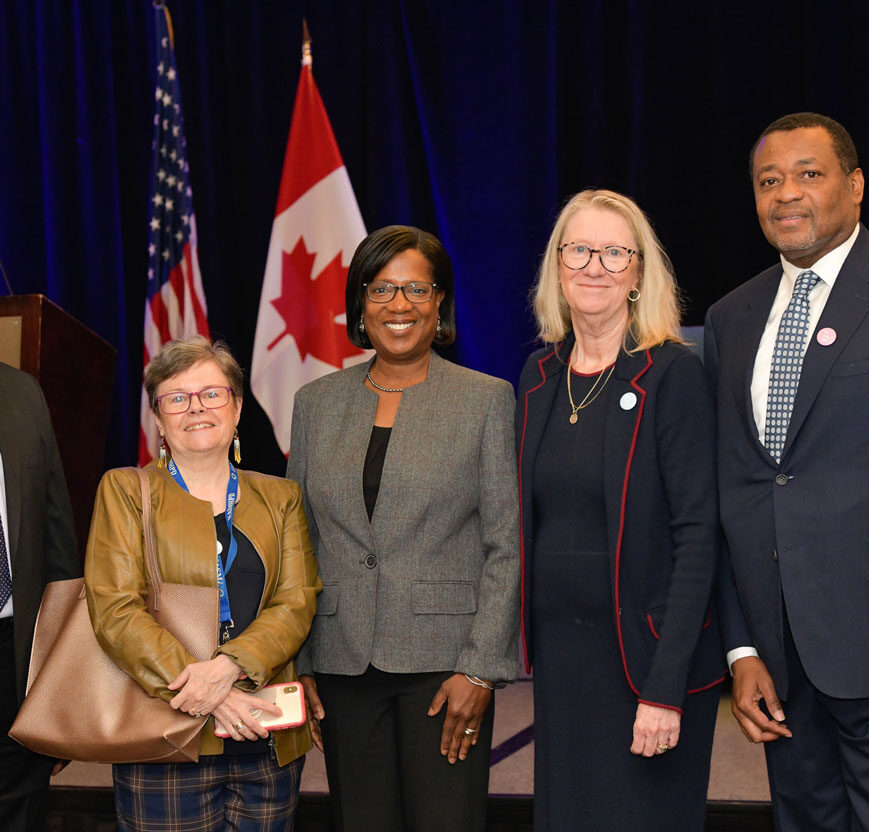
Three women and a man in a photo together

Global Network

We are a global collaboration funded by a range of countries, including: 

Australia, Canada, England, Italy, Northern Ireland, the Netherlands, New Zealand, Republic of Ireland, Scotland, Slovakia, Sweden, USA and Wales. 

We also work in partnership with leaders from other countries and regions including:  Armenia, Belgium, Germany, Kenya, Switzerland, Zambia to name a few.  

We also work with a number of organizations including: MindForward Alliance, Global Mental Health Peer Network (GMHPN), United for Global Mental Health (UGMH), Pacific Behavioral Collaborating Council, Le Va, University of Auckland – Whāraurau, MHE, EUCOMMS, NASMHPD, NASDDDS, CBHL, NHS Confederation Mental Health Network.  

Australia, Canada, England, Italy, Northern Ireland, the Netherlands, New Zealand, Republic of Ireland, Scotland, Slovakia, Sweden, USA and Wales .

“Working with GLE has been a great experience for our country. We’ve completely reversed the mindset of what we’re doing and how we’re doing it.”

Andrej Vršanský, League for Mental Health Slovakia

View our Global Network

  • Australia flag

    The Australian Government

  • National Mental Health Commission logo

    National Mental Health Commission

  • Canada flag

    Government of Canada

  • England flag

    Department of Health and Social Care England

  • Department of Health Northern Ireland logo

    Department of Health Northern Ireland

  • Netherland flag ggz

    de Nederlandse ggz

  • Netherland flag VGN

    VGN

  • New Zealand flag Te Whatu Ora

    Te Whatu Ora Health New Zealand

  • New Zealand flag Whaikaha

    Whaikaha Ministry of Disabled People

  • Republic of Ireland flag

    Health Service Executive Ireland

  • Italian flag Bologna

    Azienda Unità Sanitaria Locale di Bologna (AUSL Bologna)

  • Scotland flag

    The Scottish Government

  • Slovakia flag

    The League for Mental Health Slovakia

  • Sweden flag

    Swedish Association of Local Authorities and Regions

  • US flag

    Substance Abuse and Mental Health Services Administration

  • Welsh flag

    Health and Social Care Wales

Advisory Groups

Global Leadership Advisory Groups (GLAGs)  oversee and inform the work and strategic priorities for the organization. Substance Use and Addiction  is represented within the Mental Health and Disability Advisory Groups. 

    • Australia

      Dr Grant Sara

      Director, InforMH, New South Wales Ministry of Health

    • Paul McCormack

      Interim CEO, National Mental Health Commission

    • Canada

      Karla Thorpe

      Vice President, External Affairs and Development, Mental Health Commission of Canada

    • Stephanie Priest (Co-Chair)

      Acting Director General, Centre for Mental Health and Wellbeing, Public Health Agency of Canada

    • England

      Fiona Walshe

      Director, Mental Health and Disabilities, Shielding and Volunteering Policy, Department of Health and Social Care

    • Republic of Ireland

      John Meehan

      Assistant National Director, Mental Health Head, National Office for Suicide Prevention & Planning, Health Service Executive

    • Dervila Eyres

      Assistant National Director, Head of Operations, Mental Health Services, Health Service Executive

    • Donan Kelly

      Assistant National Director, Child & Youth Mental Health Office, Health Service Executive

    • Brian Higgins

      Assistant National Director, Change Planning and Delivery for Disability and Mental Health, Health Service Executive

    • Netherlands

      Sabien Raams (Co-Chair)

      Executive Director, Emergis, Integrated Mental Health Care Service Provider

    • Rene Keet

      Director, Community Mental Health Service, GGZ-Noord-Holland-Noord

    • New Zealand

      Robyn Shearer

      Deputy Chief Executive, Ministry of Health New Zealand

    • Rae Lamb

      CEO Te Pou, The National Centre of Mental Health Research, Information and Workforce Development

    • Kiri Richards

      Associate Deputy Director General, Mental Health and Addictions, Ministry of Health New Zealand

    • Jo Chiplin

      Director Mentally Well, National Commissioning, Te Whatu Ora

    • Northern Ireland

      Fiona McCausland

      Head, Adult Mental Health Unit, Department of Health

    • Gavin Quinn

      Director of Mental Health (Acting), Department of Health

    • Scotland

      Stephen Gallagher

      Director of Mental Health, Scottish Government

    • Slovakia

      Andrej Vrsansky

      CEO, League for Mental Health

    • Sweden

      Fredrik Lindencrona

      Research and Development Manager, Swedish Association of Local Authorities and Regions

    • United States of America

      Anita Everett

      Director, Center for Mental Health Services, Substance Abuse and Mental Health Services Administration

    • Brian Hepburn

      Executive Director, National Association of State Mental Health Program Directors

    • Ron Manderscheid

      Adjunct Professor, Johns Hopkins University and University of Southern California

    • Mike Weaver

      Patient Affairs Coordinator, South Carolina Department of Mental Health West Columbia, South Carolina

    • Wales

      Shane Mills

      Director of Quality and Mental Health/Learning Disabilities, National Collaborative Commissioning Unit, NHS Wales

    • Stephen Clarke

      Mental Health Nursing Officer, Office of the Chief Nursing Officer, Welsh Government

    • Australia

      Andrew Whitecross

      Group Manager, Disability and Carer Programs, Department of Social Services

    • Luke Mansfield

      Group Manager, Disability Reforms and Royal Commission, Department of Social Services

    • Ms Anne Skordis

      General Manager Market Coordination, National Disability Insurance Agency

    • Canada

      Ross Chilton

      Chief Executive Officer, Community Living British Columbia (CLBC)

    • Joanne Mills

      Vice President, Quality Services and Indigenous Relations, Community Living British Columbia (CLBC)

    • England

      David Nuttall (Chair)

      Deputy Director, Dementia & Disabilities, Department of Health and Social Care

    • Ian McCreath

      Head, Think Local, Act Personal (TLAP)

    • Clenton Farquharson

      Associate Director, Think Local, Act Personal (TLAP)

    • Ireland

      Gerard Tully

      Head of Stability and Sustainability, Assistant National Director, Health Service Executive

    • Bernard O’Regan

      Head of Disability Strategy and Planning, Office of Disability Strategy and Planning, Health Service Executive

    • Brian Higgins

      Assistant National Director: Change Planning and Delivery- Disability and Mental Health, Health Service Executive

    • Netherlands

      Ernst Klunder

      Board Member at VGN and Chairman of the Board of Directors at ‘s Heeren Loo

    • New Zealand

      Brian Coffey

      Chief Advisor to the CEO Whaikaha- Ministry of Disabled People

    • Amanda Bleckmann

      Interim Deputy Chief Executive, Operational Design and Delivery Whaikaha – Ministry of Disabled People

    • Peter Reynolds

      CEO, New Zealand Disability Support Network

    • Scotland

      Stephen Gallagher

      Director of Mental Health, Scottish Government

    • Charlie McMillan

      Chief Executive, Scottish Commission for Learning Disability

    • United States of America

      Jennifer Johnson

      Deputy Director, Administration on Intellectual and Developmental Disabilities (AIDD), Administration for Community Living (ACL)

    • Ruby Moore

      Executive Director, The Georgia Advocacy Office

Collaborative Groups

GLE collaboratives are led by members and the number of groups has increased over the yearsTheir work and activities contribute significantly to our mission and vision. 

  • Employment 
  • Knowledge Mobilization Hub on Suicide Prevention 
  • Local Area Coordination 
  • Self-Direction 


  • The 2SLGBTQIA+ collaborative was established in 2023 to

    • Increase the visibility of leaders who are 2SLGBTQIA+ across GLE and advise the board on the further development of inclusivity and intersectionality within GLE 
    • Work with other groups within GLE to learn from the experience of trauma and shame and co- produce with today’s young people meaningful responses 
    • Gather data and stories that help the sector to understand issues affecting the 2SLGBTQIA+ community and to improve the experience of people who are 2SGBTQIA+ who have mental health problems, have issues with substance misuse and/or have a disability.  

    To become part of the network or to obtain more information please contact peter@gle.world.

  • The Addictions Leadership Collaborative was established at the 2022 Leadership Exchange held in Christchurch, New Zealand.

    Its purpose is to share ideas and promote innovation, with a focus on reducing stigma and discrimination, and enhancing positive outcomes for people.

    The Collaborative acknowledges addiction has effects on everyone – with intersectional ties across mental health, disability and other minority groups and populations.

    Members include leaders in policy, service, lived/living experience backgrounds.

    The Collaborative meets online quarterly to: 

    • Provide opportunities for knowledge sharing relating to substance use and gambling harms, and identify innovative solutions and approaches regarding agreed areas of interest 
    • Share best practices, interventions and innovations to recognise, address and reduce stigma and discrimination 
    • Serve as a sounding board for members to share ideas and practices 
    • Align with GLE values and enhance GLE frameworks and activities

    To become a part of the Collaborative, or for more information contact jenny@gle.world.

  • This collaborative works to ensure national multidisciplinary clinical leaders can share and explore   issues that are of priority/concern in their countries. The focus is on issues consistently feature in all nations including: 

    • Workforce 
    • Financing 
    • Quality 

    The focus is on sharing knowledge and expertise to help address these areas of challenge. 

  • This collaborative works to ensure global discussion on public health and mental health impacts, focusing on: 

    • Strengthening population mental health and resilience as a key part of emergency response, preparedness and a comprehensive mental health systems 
    • Evidence and strategies to improve population mental health are relevant and applicable to national direction on Covid-19 recovery and renewal 
    • Building capacity for mental health and wellbeing within communities 
  • Through our Emerging Leaders work, we bring together established and emerging leaders to connect in a space of mutual respect and to be contributors with insights of equal value to share.  

    We also share helpful practice and adaptations, which enable all leaders to integrate support for emerging leaders into their practice, in all spheres of life. 

    This work is currently paused as we seek to review and renew, with the aim of recommencing in 2026. 

  • International CIty and urban Regional CoLlaborativE (I-CIRCLE)

    I-CIRCLE is a collaborative supported by GLE that involves cities and urban regions working together to problem-solve and spread innovations to support mental health and wellbeing and enable citizens to thrive.

    The idea was conceived when Dr Arthur Evans, then Philadelphia’s Commissioner of Behavioral Health and Disability Services, now a GLE Board Director, presented at the Leadership Exchange in 2015.

    Dr Evans highlighted the major issues for our urban communities (e.g. homelessness, education, employment, criminal justice) are intertwined with behavioral health issues and how effectively addressing those helps to improve mental health in the population.

    I-CIRCLE brings together leaders from several cities, towns and urban regions around the world, including in the US, Canada, England, Ireland, Sweden, the Netherlands. Australia and New Zealand.

    Participants share knowledge about emerging and developed best practices and innovations. The focus is on taking a public and population health approach. 

  • The Lived Experience Council (LEC) is an independent lived experience group, with its own identity, purpose and workplan, linked with GLE’s strategic direction.

    Clenton Farquharson CBE chairs the LEC, bringing significant lived experience and expertise to the role. Clenton is also a Board member of GLE.

    The LEC is in its early days of formation and will comprise six members, including the chair, and will be representative of regions and a range of lived experiences.

    For further information, contact Jenny Wolf, GLE Programme Lead jenny@gle.world or Sean Russell sean@gle.world.

  • This collaborative brings together leaders in philanthropy focused on mental health, substance use disorders and wellbeing to examine ways to strengthen their individual and collective impact. The focus has been on addressing behavioural health issues and to provide a safe place to discuss key funding and strategic issues.

    Co-lead by Kristen Ward from Mindful Philanthropy and Kathy Langlois, GLE, this collaborative aims to foster strategic conversations and cross-sharing to deepen the collective understanding of the impact philanthropy can achieve in mental health grant-making.

    Philanthropic organizations in the US, Canada, England, Australia and New Zealand who work in the mental health space have come together to discuss common issues to assist their knowledge of innovations.

    Topics of discussion have included:

    • Coordination of behavioral health and primary care, led by the New York Community Trust
    • Racial Equity, led by the Steve Fund, the Hogg Foundation, and the Scattergood Foundation
    • Children’s mental health and the impact of the pandemic, led by Vredeveld Strategies
    • We have been pleased to welcome the Niall Fay Foundation and the Christchurch Foundation
  • The Rural Behavioral Health Collaborative was formally established during the 2019 Leadership Exchange, with the then IIMHL connecting key rural mental health leaders in member countries, coinciding with the publication of the Orange Declaration (Australia) on rural mental health.

    The aim of this collaborative is to encourage innovation and good practice in relation to issues of accessibility of services in rural areas as well as addressing the specific mental health needs of people living in rural areas.

    Community development and well-being are rapidly becoming major foci for behavioral healthcare. If the field is to change the power dynamics that sustain systemic racism, the social and physical determinants of health that lead to trauma responses and behavioral health conditions, and the isolation and poverty of historically excluded groups, then it will be necessary to engage, listen to, and support community members themselves as they confront and address these fundamental issues.

    The collaborative works to:

    • Develop resources and showcase good practice
    • Redefine inclusivity to include previously non-engaged and marginalized groups
    • Get things done through relationships and interactions
  • Whāraurau is a national centre, funded predominantly by the Ministry of Health in New Zealand to deliver workforce development initiatives for the Infant, Child and Adolescent Mental Health and/or Alcohol and Other Drugs (ICAMH/AOD) sector.

    Benefiting from strong links with the GLE (formerly IIMHL community), the collaborative has supported and coordinated infant, child and adolescent/youth activity for 15 years. We manage the inter-Leadership Exchange zoom meetings where various countries lead the topic – examples presented during the last year include:

    • Youth Leadership
    • Eating Issues/Eating Disorder
    • Maternal methamphetamine use
    • COVID impacts on child and youth wellbeing

    Whāraurau has a wide range of resources to assist the ICAMH/AOD workforce in their mahi.

    Examples include:

    This collaborative works to:

    • Develop the child and adolescent mental health workforce nationally
    • Provide training and resources of a high quality to mental health professionals
    • Advocate for mental health needs of children, young people and their families/whānau
    • Promote research in child and adolescent health
  • Indigenous populations and communities around the world confront historical, cultural, socioeconomic and forced geographic limitations that have profound impacts on mental wellness. The impacts of colonialism and, for some indigenous populations, forced residential schooling and systematic removal of children and the resulting loss of culture and family ties, have contributed to higher risks of mental illness in these groups.

    In addition, there are barriers to healing and mental wellness, including inconsistent cultural competence of mainstream mental health professionals, coupled with the limited numbers of Indigenous mental health professionals.

    The Wharerātā Declaration is a proposed framework to improve indigenous mental health through state-supported development of indigenous mental health leaders, based on a new indigenous leadership framework.

    Wharerātā Group has actively worked to ensure an indigenous focus in all Leadership Exchanges.

  • Women leaders in the mental health and disability fields came together for the first time in 2021. The aim is to focus women’s leadership style, which is open, collaborative, supportive and inclusive, contributing to diversity in decision-making and adding value to organizations.

    This collaborative works to:

    • Increase women’s visibility as strong leaders
    • Improve women’s representation at decision-making tables
    • Put in place the required supports and actions
    • Work to improve the wellbeing of women, girls and their communities

Join us

Joining GLE has never been easier. Stay up to date, make connections, become a global member today.

“The ability to connect with others across the world is so important for us – especially being able to share experiences during Covid and its impact on young people.”

John Zonnevylle, New Zealand

Become a member

A woman sat on her laptop with a phone in her hand and a coffee next to here

We’d love to hear from you!

Get in touch