Peer and Lived Experience Leadership Match – the Netherlands
31 Jan 2025
Share
Reflections from Seán Russell, (MBE),
GLE Chief Operating Officer & European Lead
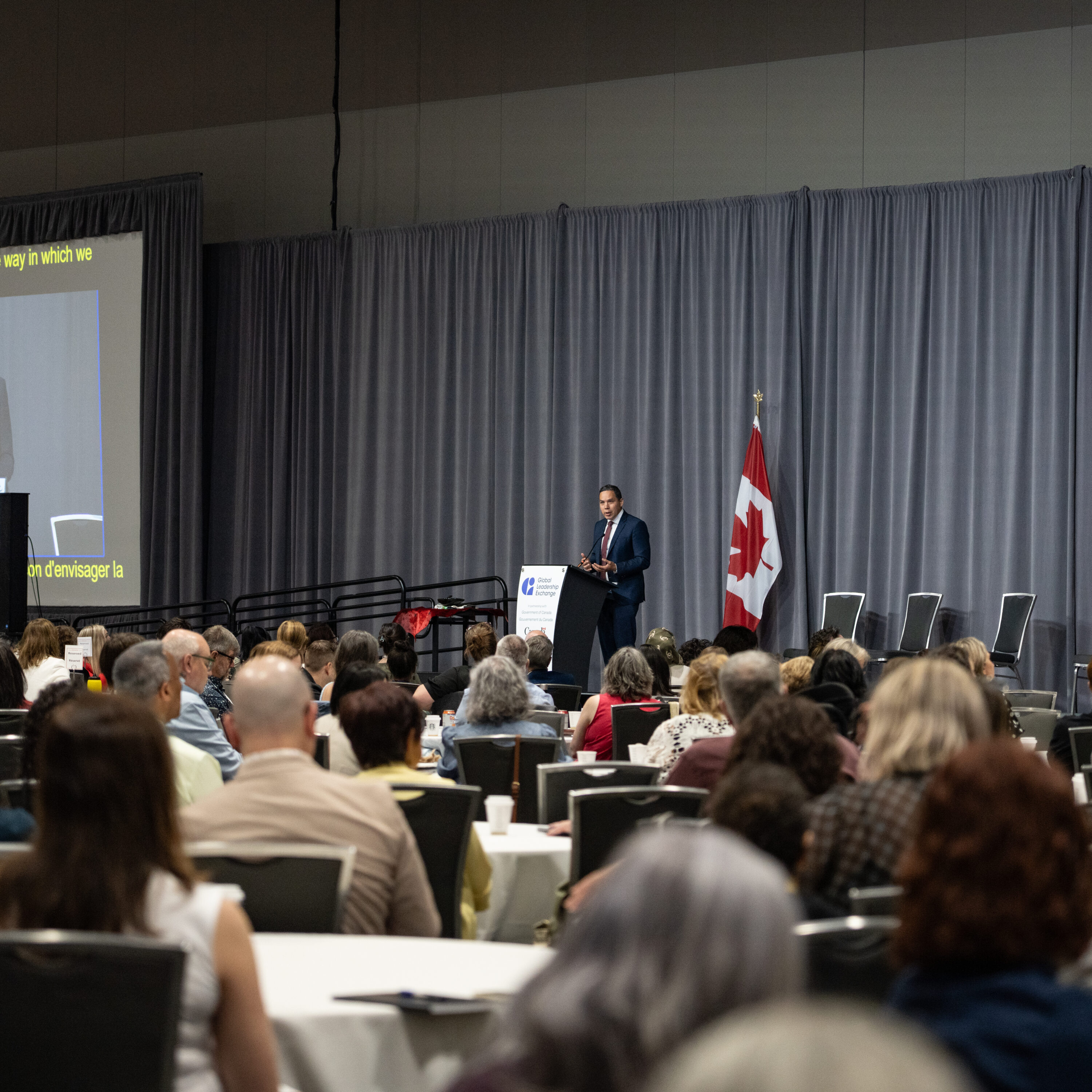
GLE was thrilled to co-host the Peer and Lived Experience match with EUCOMS for the Global Leadership Exchange in Heiloo, Netherlands in June 2024. The match consisted of 30 peer leaders from 12 different countries from across the world*.
Leaders and emerging leaders met to develop connections, share experiences, practice, innovation, developments, exchange information and work together to address and improve the mental health, disability, and substance use sectors.
Peer Leaders took the opportunity to reflect on, explore, clarify and promote the aims of Peer and Lived Experience Leadership. We sought to explore international Peer / Lived Experience Leadership principles, practices, and values, that can be taken back locally to enhance or further peer/lived experience policy, practice, approaches and programmes. Given the diversity of experiences, geographies and cultures represented at the match, we were keen to draw on the collective wisdom in the room and explore different approaches to Peer / Lived Experience Leadership.
Overall, our time together focused on answering the following three questions:
- What is Peer/Lived Experience Leadership for?
- How do we do it?
- What do we need to do it?
We wanted to create connections and a network where we can collaborate and learn from one another, ensuring diversity of thought is brought into our practice. Our conversation brought about an acknowledgement that there are hundreds and, in some instances, thousands of years of untapped cultural knowledge, expertise and practice that is made invisible by the bio-medical Western paradigm. We settled on the unifying concepts of “servant leadership”, “convening” and “network weaving” as our themes to ground the two days as we felt that our work is irrelevant unless it is of service to all who use services to improve their circumstances and outcomes.
We have gained clarity on how peer leadership can be integrated into different parts of systems, structures and communities so that it is seen as more than a role in a hierarchical structure. We discussed that for peer leadership to thrive, we should prioritise working in a servant and networked leadership model moving forward, one where leadership is seen as convening rather than a hierarchical pyramid. Importantly we also discussed that peer leadership should be seen as a collective leadership model, where the ‘I’ in leadership is limited, and a sense of building communities of leadership and leadership values together, is promoted.
We do not represent everyone working in this space progressing service innovation, reform, and improvement, but it was incredible how our narratives mirrored each other, and that we were able to achieve such consensus.
We see this conversation as a start, an ongoing discussion to be taken back to each of our localities and worked on further with this international work guiding our thinking. We have built this work for the present and future but are mindful of building a legacy for those coming along with and behind us.
Also, with clinical approaches dominating mental health and substance use care, and a diminished community component, there is an ability and a gap to be filled and led by peer/lived experience. If clinicians are the experts in clinical care, then peers/lived experience leaders are experts in community care, and this can be where we see the role fully thrive and develop.
Ultimately, it was important to leave with something tangible to take back to our organizations, communities, and teams to continue the conversation locally, whilst being able to reference work created internationally as guiding our thoughts and practice in relation to Peer Leadership. We’ve created “The Heiloo Declaration” (see below) describing and promoting peer leadership. We see this as a living document that will continue to develop and evolve.
Our mission does not end here. We are now working on developing a thought piece that pulls together our collective answers to the above questions. We hope that this document will act as an anchor, create a common understanding, and be something that others globally can refer to for their work in their own communities.
The Heiloo Declaration 2024
Download PDF