Blog: The Shadow Side of Leadership
28 Nov 2024
Share
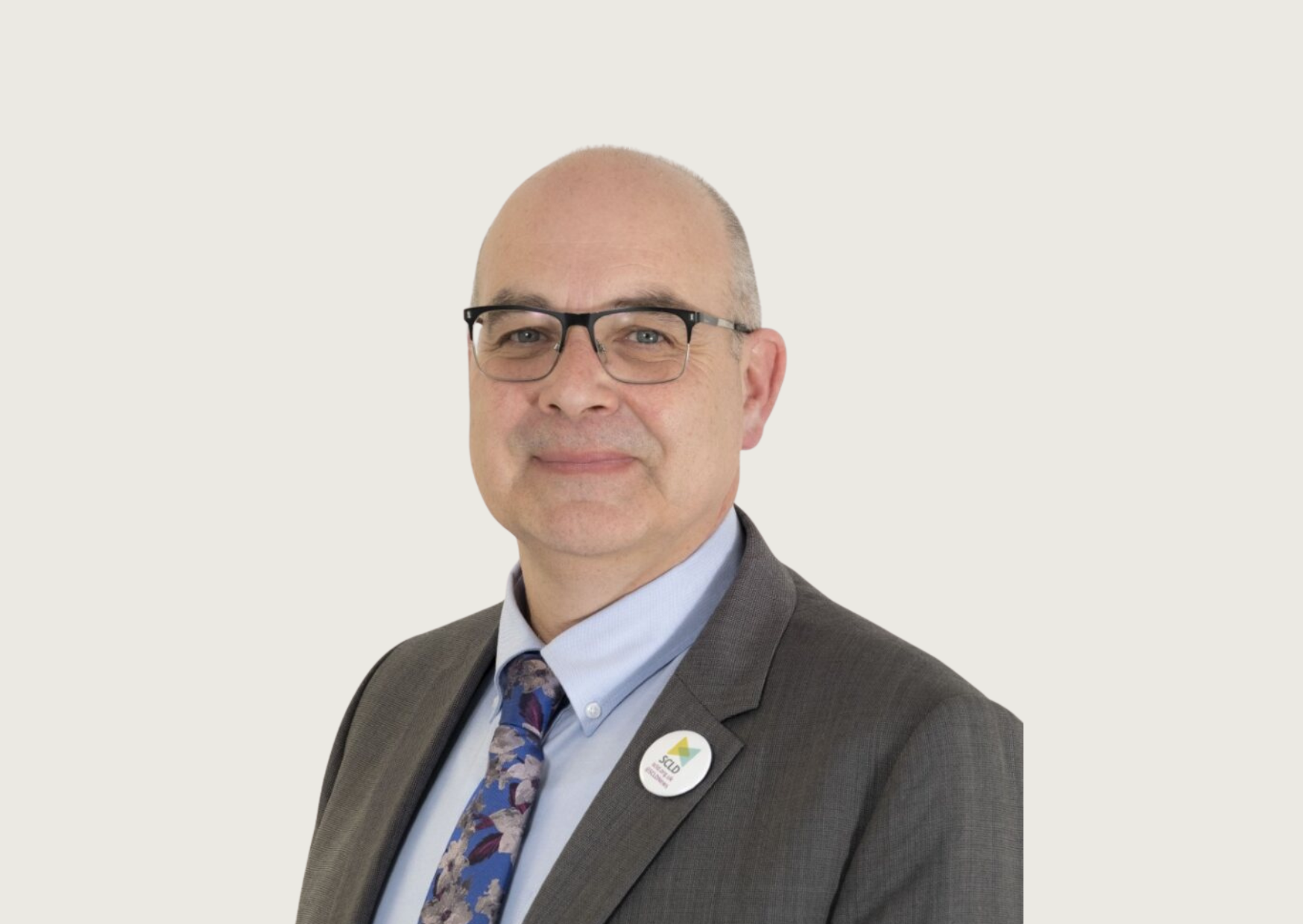
Charlie McMillan is a member of GLE and has, for many years, contributed to our work.
Throughout his career, he has supported people with learning disabilities to live full, safe, loving and equal lives.
Fundamental human rights for everyone surely but these things Charlie has had to fight for both professionally and personally.
A proud member of the LGBT+ community, he has kindly taken the time to share some of his experiences as a gay man, in his own words.
It goes without saying that I have ‘skin in the game’. I am an out gay man and have been since 1982. I am cis-gendered, not disabled, white, getting older and privileged in many ways.
I live in Scotland – the country that exported its own brand of legalised homophobia to many other countries through its drive for Empire in the 18 and 19 hundreds.
I speak with my own lived experience. I know very little of the experience of a two-spirit or indigenous LGBT+ identified person in Canada or Australia, but I can learn.
Inclusion… for some
In the UK, it has taken over 70 years of advocacy and activism to deliver (nearly) full equality in the law for people from the LGBT+ community. And just as we are getting there (using Scotland as the example – late to the party but we got there and more recently we have taken the lead), we realise our struggle is not over yet. We still have a long way to go.
As the 2024 chapter of our ‘permacrisis’ continues to unfold, we are becoming increasingly aware that the finishing line for LGBT+ inclusion is getting further away. We are facing more barriers to our fundamental human rights than we have in many years. A toxic narrative is threatening to tear apart our beloved community. Inclusion for some but definitely not for all appears to be the preferred approach.
It’s a narrative that seems to suggest that the majority of our community can have their rights providing we let go of some of our brothers and sisters – a real-life example of life-boat ethics.
Bear in mind, our community is relatively new in real terms and requires constant nurturing and care. We are a great example of the ‘organic’ nature of things – the LGBT+ community is something that has emerged and grown over time, born of inclusion and life’s longing for itself. It belongs to no-one, and it belongs to everyone who chooses to be part of it. We move forward sometimes proudly, displaying our fabulous colours, glitter and feathers, and sometimes tentatively, testing our own boundaries, challenging our unwritten constitution, arguing about belonging and questioning our purpose.
Can we get on with our lives now? Am I in or out? Are they in or out? Can we forget about the politics and just party? Who cares?
I would love to say the fight is over but of course it’s not and not only that, the forces of reaction, exclusion and hate are joining up in a way we have never experienced before – well, not since the 1980s, 1990s and 2000s. If they breach this wall, which one is next? The cost of inaction will be the regression of our hard-won human rights. It is a very real challenge.
It seems that our rights are too expensive (both figuratively and financially) to be sustained – we should be thankful and get on with it!
So, the LGBT+ community (and let’s not get sniffy about the terminology – come one, come all, you belong if you feel you belong and can live within our gloriously positive values. All are welcome – our allies, families, and friends – we cannot do it on our own) needs to regroup and refocus.
Trauma, our constant companion
To do this successfully and with minimum impact on the individual leaders of the future, I believe we need to have a more informed relationship with both individual and generational trauma. We cannot issue a call to action or expect people to lead us unless and until we learn from the past, nurture our new and emerging leaders, and use our experiences to help our community grow. Oh, and we need to learn from other civil rights movements and how they deal with trauma in order to continue to organise and effect change.
Most of our rights have been hard won and and are a significant achievement, but they all came at a cost. Trauma has been our constant companion.
During our invisible years we created our own language to enable us to survive. I mean, we created our own language to communicate to each other. How inventive were we in trying to overcome loneliness, isolation and fear of prosecution, and at what cost?
50 years ago, you could still get treatment on the NHS to help ‘heal’ you from your homosexuality. I mean drugs, ECT, hospitalisation. You name it, they tried it. I was often in discussions in the early 1980s which could easily veer towards the maudlin, ‘if they came up with a pill tomorrow which would cure us, would you take it? I mean, would you though?’
Our families regularly rejected us – the LGBT+ diaspora is real and one of the great untold migration story of the last 50 years. In the UK, it usually meant a move to London. So many families in Scotland had an uncle or an aunt who was talked about in whispers and had moved to London never to be heard from again. This painful and heartrending exclusion came to a head during the HIV and AIDS epidemic in the early 1980s. The traumatic scenes from ‘It’s a Sin’ where the family having excluded the gay son to the depravity of London, swoop in, remove the individual from their logical family and take them back to a sterile family home to die before burning their belongings in the back garden still trigger in me a real profound sense of grief and loss.
That was if the infected person wasn’t treated in a hospital, devoid of care or understanding. People were judged, abused, cut off, fed through letterboxes, treated by people in hazmat suits…you name it, they made sure we knew it was our fault we were being killed by this new virus – and we had to be made to pay.
At least this hate-fest helped to define our resistance. Leaders started to emerge – people like Derek Jarman, Peter Tatchell, Jimi Somerville, the Lesbian Avengers – resistance grew and grew, despite HIV and AIDS, despite Section 28, despite the hate-filled rhetoric which we came to view as part of life.
And thank goodness for our allies – those family members who stuck by us, film-makers, pop stars and princesses, the theatre, literature, a few politicians, even a few doctors. They joined forces with our activists and leaders, and thankfully things started to change.
However, the cost of all of this at an individual level was and is profound. Our community’s relationship with mental health and wellbeing can be tenuous at times, as many of us are still dealing with the trauma experienced in decades past.
Self-medication with alcohol, cigarettes and drugs continues to affect members of our community significantly. Self-harm and suicidal ideation are around more for us than for the majority. Guilt and shame feel as if they are pre-requisites of an LGBT+ identity.
The causes of trauma are still around for so many of us – ask a trans person what it’s been like and is like for them? How do they endure the torrent of hatred and abuse that is heaped on them? What impact does this have on the individual?
Homophobic and transphobic bullying in schools continue to be major issues for many children and young people.
What impact does it have when your elected leaders make statements questioning your right to exist, whatever carefully nuanced wording they choose?
Goodness, who would want to be a leader in our community?
The causes of trauma are still around and so very cruel and damaging. However, knowledge is power. Trauma is an experience and a process which we are so much more aware of than we were before. And for that I am glad. We can work with it, prepare for it and manage its impact.
I believe this means we can better prepare our leaders of the future, whom we so need now. Being open and honest about where a lifetime of leadership and activism can take you is empowering.
Recognising the risks and likelihood of trauma, maintaining your wellbeing and creating policies, systems, environments and people which are inclusive and at the same time trauma informed will help greatly in creating platforms which amplify everyone’s voice.
If we are to succeed in achieving equality for everyone in our community, which is my goal and the goal of so many others, intergenerational leadership work in the LGBT+ community which is robustly trauma aware can and must be our focus. Anything else will only mean our future leaders are forced to relive the past in the most painful ways.